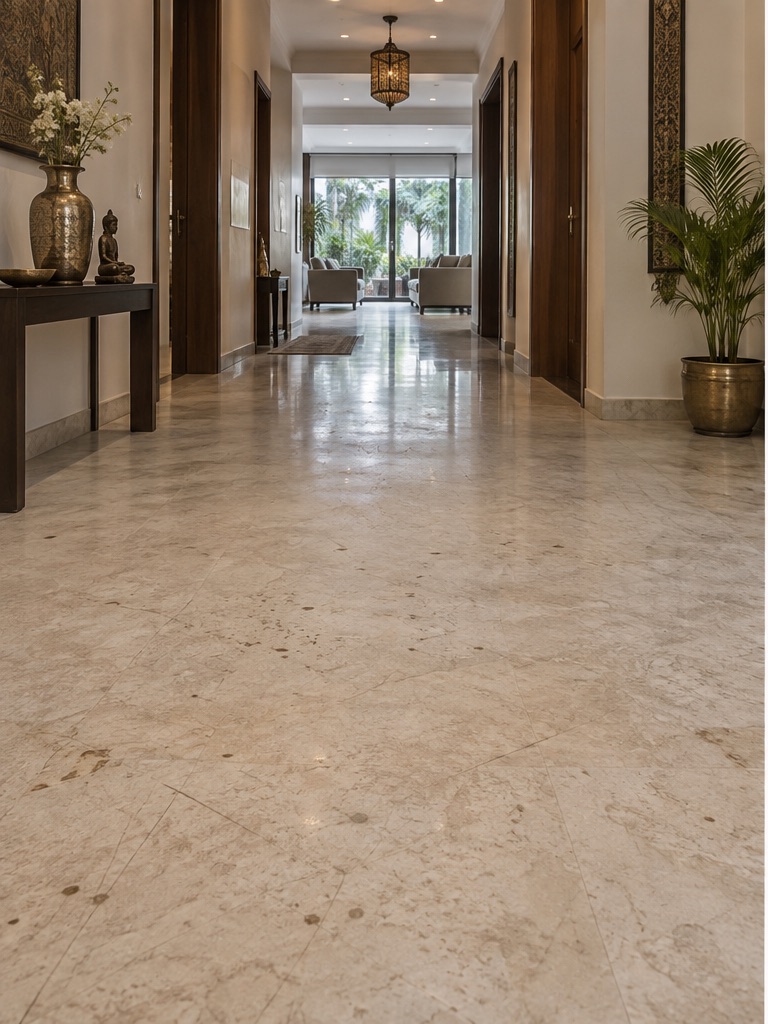
Marble floors in Karachi can lose their finish through foot traffic, grit, spills and cleaning habits. Before booking “marble polish,” work out whether the surface is merely less glossy, physically scratched, etched, uneven, cracked or stained. Those symptoms call for different work. A useful quote starts with the floor's condition, not a generic rate.
First, identify what has changed
General dullness: a floor that reflects less light than it once did may be a candidate for polishing, provided it is otherwise level and sound. Fine scratches: grit and movement can mark the finish; light marks may need a different abrasive sequence from deep scratches. Etching: acidic spills can affect the polished surface of marble, leaving pale or matte patches. Uneven joints: when one tile edge sits higher than the next, polishing alone will not make the floor level. Cracks, holes or loose pieces: these should be assessed before any finish work.
Not every dark mark is a surface scratch. A stain may sit within the stone and need a separate treatment. Test any cleaner in an inconspicuous area, and avoid assuming that a strong household acid will “bring back” shine. The Natural Stone Institute's care guidance is a useful independent reference on stone cleaning and maintenance.
Polishing, grinding, repair—or replacement?
Polishing refines an existing surface through a sequence of abrasives to improve clarity and sheen. It is usually considered when the stone is stable and level but has become dull or lightly worn. Grinding removes more material and may be needed for more significant wear, deeper marks or uneven joints. It requires judgment about stone thickness, layout and the intended finish. Repair can include filling chips, holes or joints where a suitable match is practical. Repair may remain visible; natural stone varies.
Replacement may be the sensible option when a piece is loose, extensively fractured or unsuitable for further grinding. A photo can start the conversation, but an on-site assessment may be needed to distinguish a finish problem from a structural or installation problem. Granyx can discuss the polishing and repair options shown on our marble polishing service page.
What affects marble polishing cost in Karachi?
A single online “marble polish per square foot” figure can conceal important differences. A meaningful quote considers the total area, number and size of rooms, stone type and finish, depth of scratches or etching, uneven joints, repair needs, edge and stair work, furniture movement and site access. Small or complex areas can take disproportionately more setup and detail work than an open floor.
We do not publish an unverified flat rate here. Instead, send dimensions and clear photos and ask what work is included: surface preparation, any grinding stages, crack or hole filling, polishing, protection and final cleanup. Ask whether the quoted finish is honed or glossy and what outcome is realistic for your specific stone. This helps compare like with like.
How to request a useful assessment
- Send one wide photo of each room and a close photo of the worst area in natural light.
- Show an uneven joint, chip, crack or stain from more than one angle if present.
- Share approximate length and width, floor or staircase location, and whether the area is occupied.
- Tell us whether you prefer a glossy or softer honed look and whether the floor has been polished before.
We can start on WhatsApp, then advise whether the photos are enough for a preliminary scope or whether a site visit is necessary. Send your marble floor photos to Granyx.
After polishing: protect the result
Remove grit with a soft dust mop, clean with a suitable pH-neutral stone cleaner and wipe spills promptly. Avoid acidic cleaners and abrasive pads unless a stone-care specialist has specifically advised them for your surface. Sealing and polishing have different purposes: a sealer can help with some staining risks, while polishing changes the surface finish. The best maintenance schedule depends on the stone, traffic and cleaning routine—not a universal number of months.
The short answer
If the marble is sound but dull, polishing may be enough. Deep wear or raised joints may call for grinding; cracks, holes and loose pieces need separate assessment. Share the condition and dimensions before relying on a price comparison.
Does the floor need a deeper process?
Read our practical comparison of diamond grinding, honing and marble polishing, or browse our marble selection, granite slabs and kitchen and bathroom stonework.